Kakuro Puzzle:
A Complete Beginner's Guide to Cross-Sum Logic
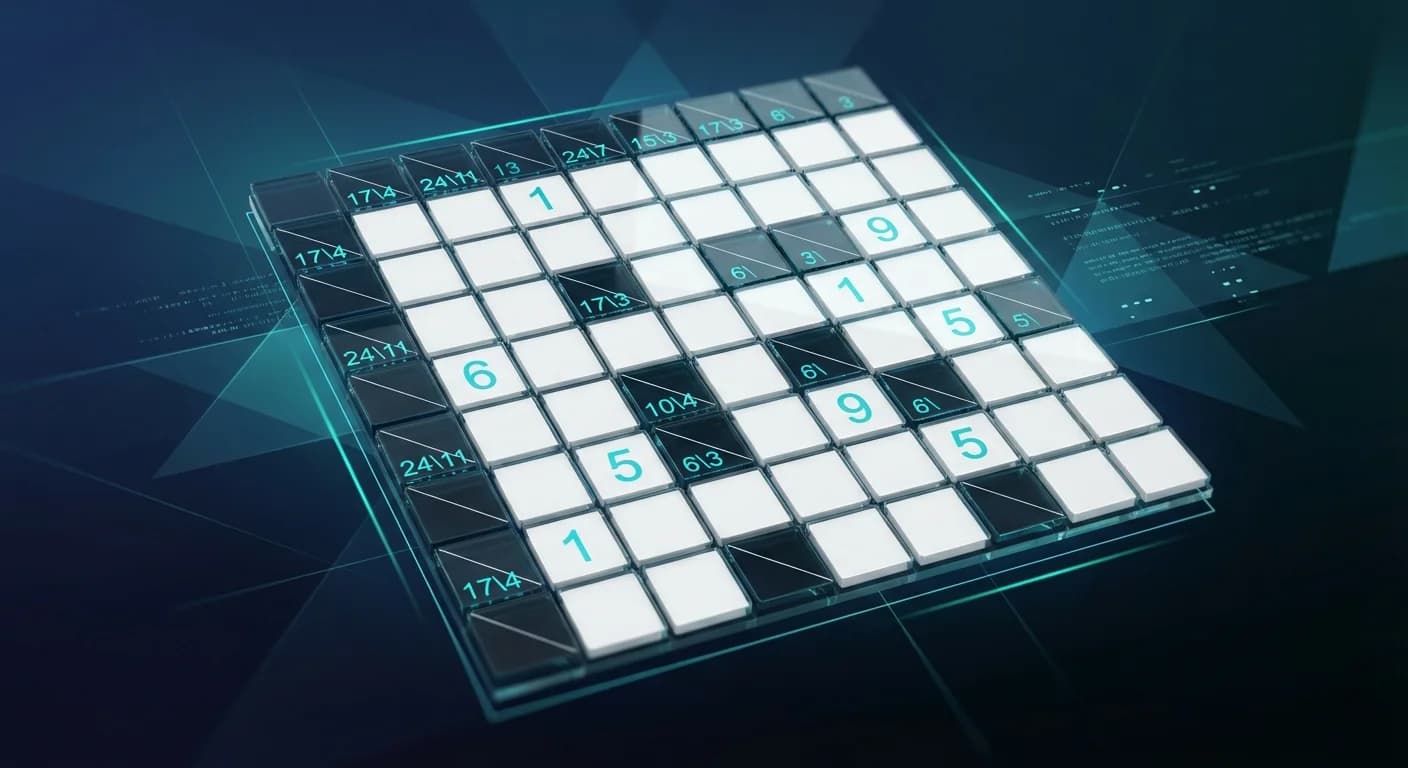
Kakuro combines the row-column logic of Sudoku with the addition constraints of crossword-style clues. You fill cells with digits 1-9 that must add up to specific sums, while never repeating a digit within any single run.
The moment it clicks is unforgettable. You are staring at a clue that says "17 in two cells," and suddenly you realize there is only one possible combination: 8 and 9. That single insight cascades through the puzzle, unlocking cells you thought were impossible just moments ago. This is the magic of Kakuro: pure logic that feels like discovery.
Kakuro first appeared in Dell Magazines in 1966 under the name "Cross Sums." The Japanese puzzle publisher Nikoli refined and popularized it, giving the puzzle its current name. Today, millions of solvers worldwide consider Kakuro the ultimate test of logical deduction combined with arithmetic intuition.
Watch the Tutorial
Prefer watching? This short video walks you through the rules and key strategies.
What Exactly Is a Kakuro Puzzle?
Kakuro presents you with a crossword-style grid containing two types of cells: black cells with numbers (clues) and white cells where you write your answers. The clues tell you what the digits in a run of white cells must sum to. Your mission: fill every white cell with a digit from 1 to 9, satisfying every sum clue without repeating any digit within a single run.
The beauty of Kakuro lies in its dual constraints. Every white cell belongs to exactly two runs: one horizontal and one vertical. When you place a digit, it must work for both clues simultaneously. Think of it as a mathematical crossword where instead of finding words that share letters, you are finding number combinations that share digits in intersecting cells.
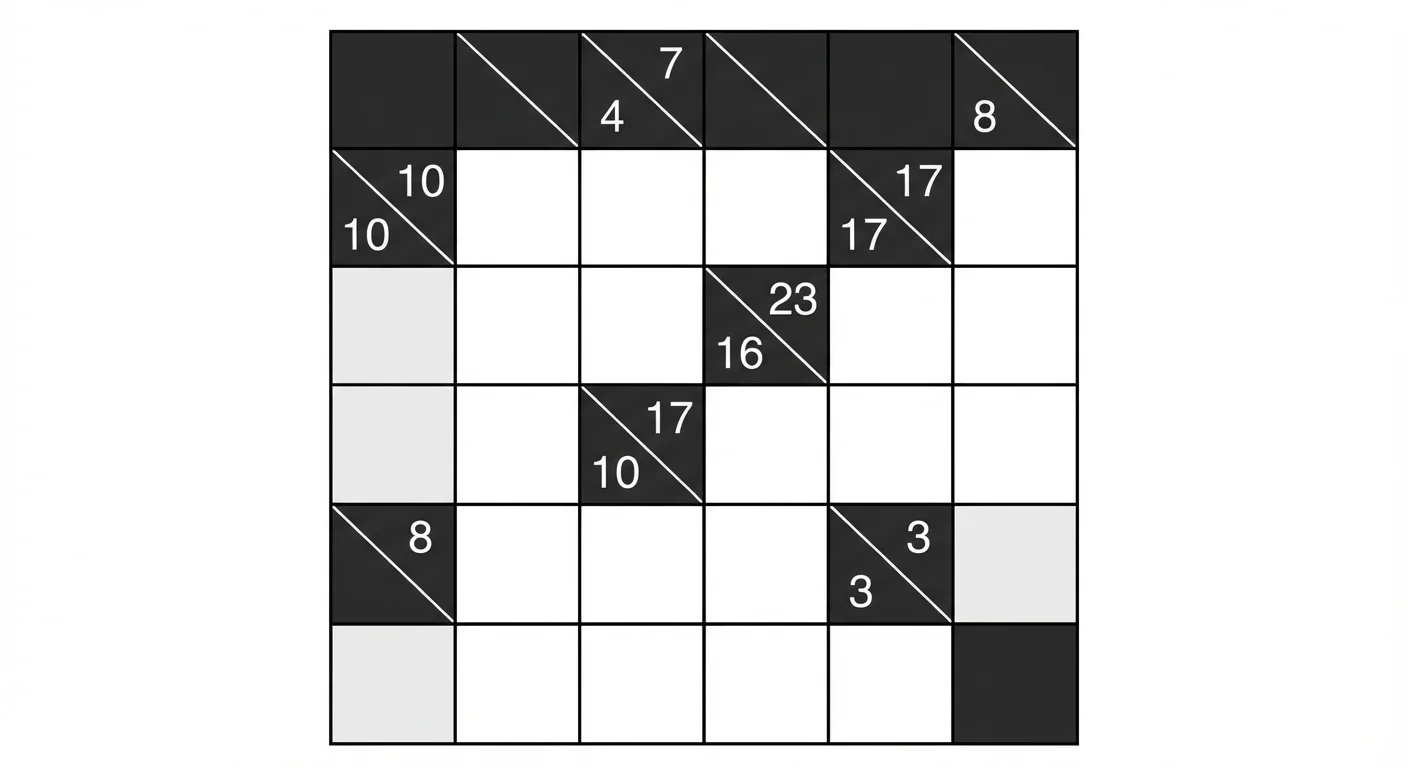
A typical Kakuro puzzle—the numbers in black cells tell you what each row or column must add up to.
The Complete Rules of Kakuro
Four simple rules govern every Kakuro puzzle. Once you internalize these, everything else is strategy.
Rule 1: Use Digits 1 Through 9 Only
Every white cell contains exactly one digit from 1 to 9. Zero is never used. Ten or higher is never used. Just the nine single digits: 1, 2, 3, 4, 5, 6, 7, 8, 9.
Rule 2: Digits Must Sum to the Clue
Each clue number tells you the exact sum required for its run of white cells. A clue showing "7" for a three-cell run means those three cells must contain digits that add up to exactly 7. Not 6. Not 8. Exactly 7.
Rule 3: No Repeated Digits in a Single Run
Within any single run (horizontal or vertical), each digit can appear only once. Think of it like seats at a dinner table—each digit can only sit in one chair per run. If a four-cell run needs to sum to 10, you cannot use 2+2+3+3. You must use four different digits.
Rule 4: Each White Cell Satisfies Two Clues
Every white cell sits at the intersection of a horizontal run and a vertical run. The digit you place must simultaneously satisfy both clues. This is where the puzzle's logic lives.
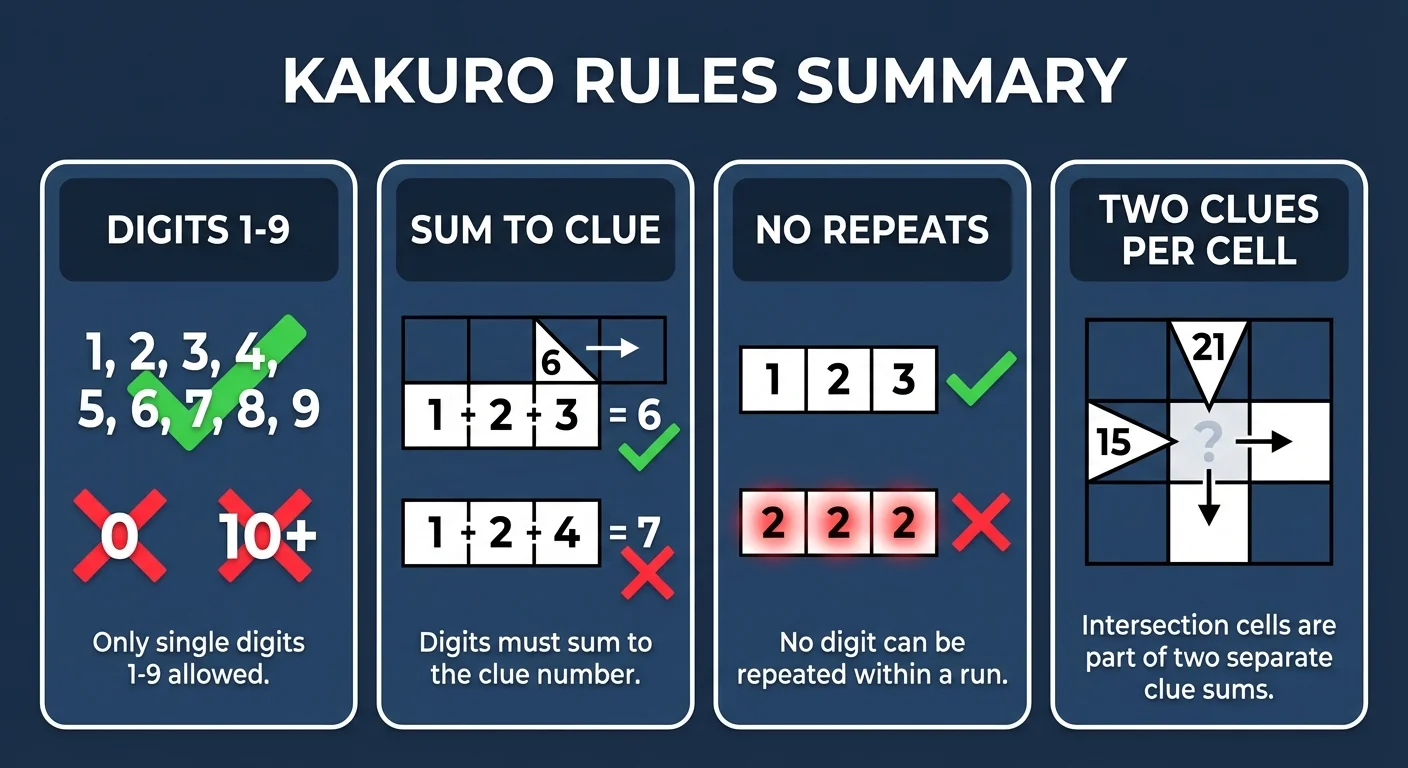
The four rules of Kakuro—simple constraints that create deep logic.
How to Read a Kakuro Grid
With the rules in your pocket, let us make sure you can read the grid correctly—this is where many beginners stumble on their first puzzle.
Black cells contain the clues. Most clue cells are split diagonally with two numbers: the number in the lower-left triangle is the clue for cells to the right (horizontal run), while the number in the upper-right triangle is the clue for cells below (vertical run).
The length of a run matters enormously. A clue of "7" means very different things depending on whether it applies to two cells, three cells, or four cells. Always count how many white cells belong to each clue before you start solving.
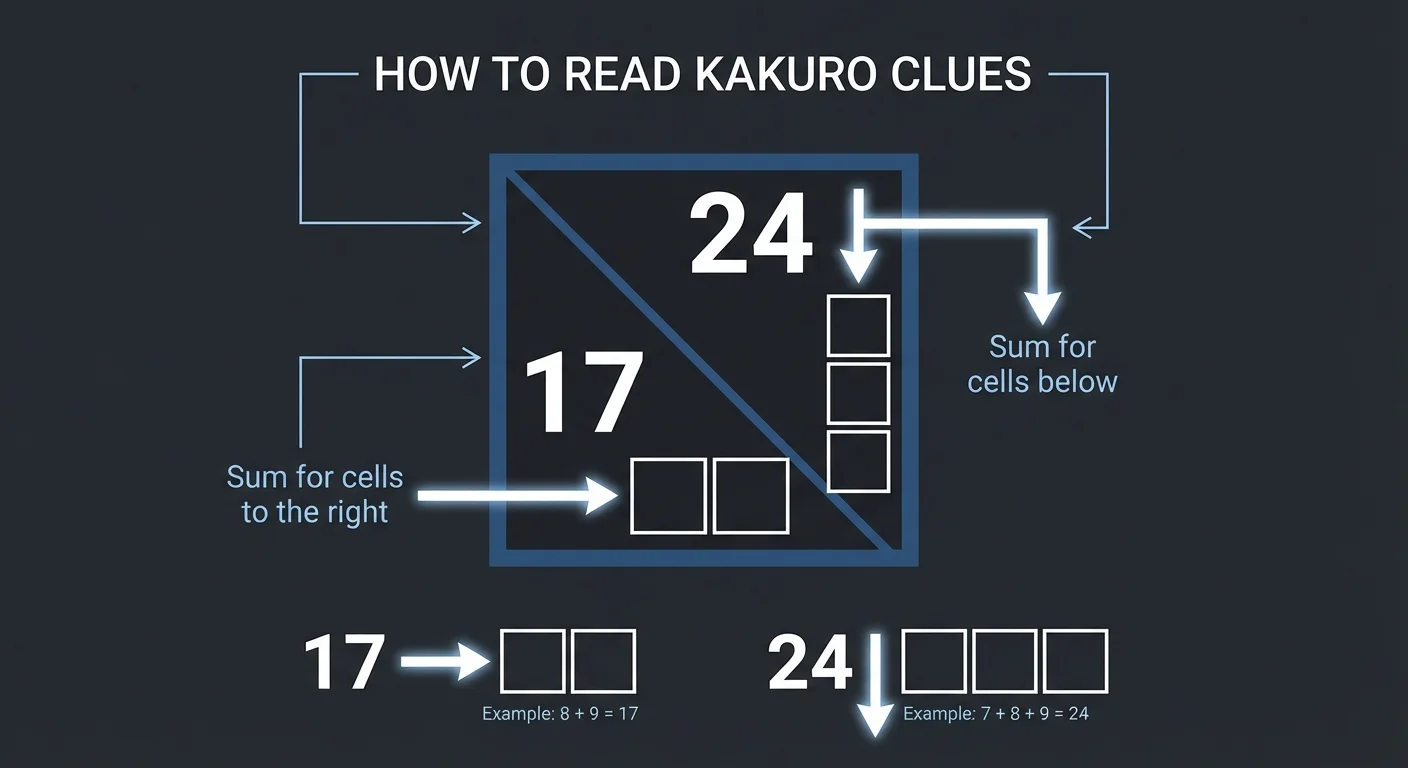
Reading Kakuro clues—the diagonal split separates horizontal clues (lower-left) from vertical clues (upper-right).
The Magic Numbers: Essential Combinations to Know
Here is a secret that transforms Kakuro from frustrating to fascinating: certain clue-and-length combinations have only one possible set of digits. Memorizing these "magic numbers" accelerates your solving dramatically.
Two-Cell Magic Numbers
- 3 = 1+2 (only option)
- 4 = 1+3 (only option)
- 16 = 7+9 (only option)
- 17 = 8+9 (only option)
Three-Cell Magic Numbers
- 6 = 1+2+3 (only option)
- 7 = 1+2+4 (only option)
- 23 = 6+8+9 (only option)
- 24 = 7+8+9 (only option)
Four-Cell Magic Numbers
- 10 = 1+2+3+4 (only option)
- 11 = 1+2+3+5 (only option)
- 29 = 5+7+8+9 (only option)
- 30 = 6+7+8+9 (only option)
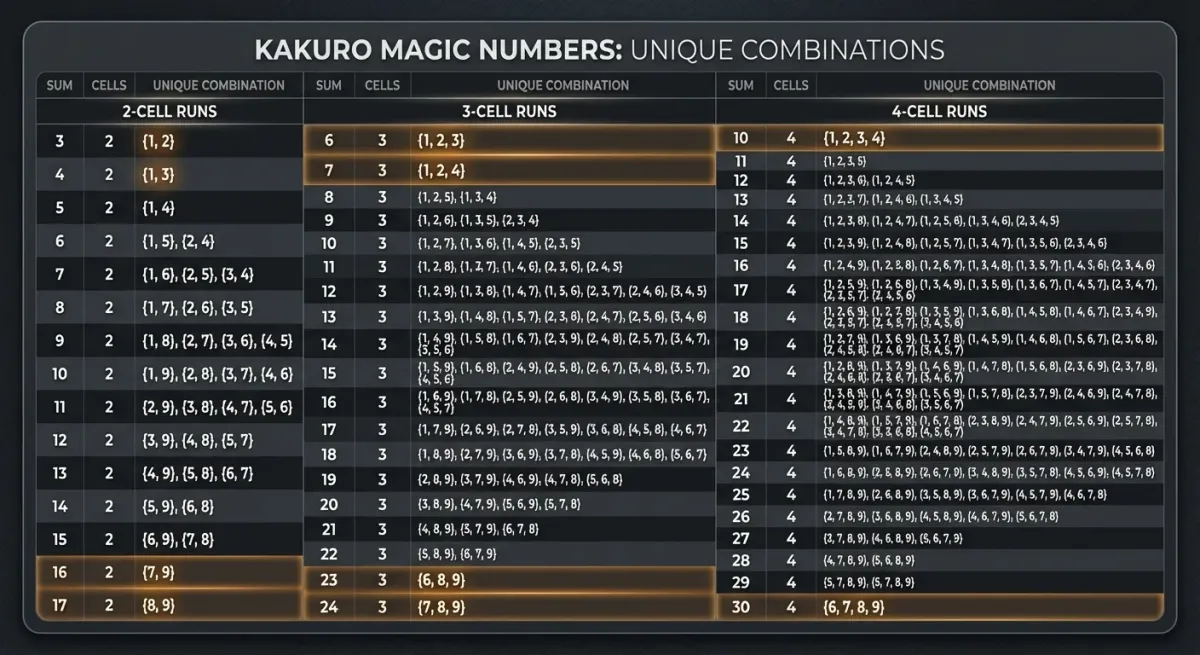
The Magic Numbers—memorize these and watch your solving speed increase dramatically.
Your First Solve: A Visual Walkthrough
Time to put everything together. Let us solve a puzzle and watch these magic numbers and intersection logic work their magic.
The Starting Puzzle
Here is our practice puzzle: a carefully verified 2x2 solving region designed to teach essential techniques. The clues are: Row 1 sums to 3, Row 2 sums to 7, Column 1 sums to 6, Column 2 sums to 4.
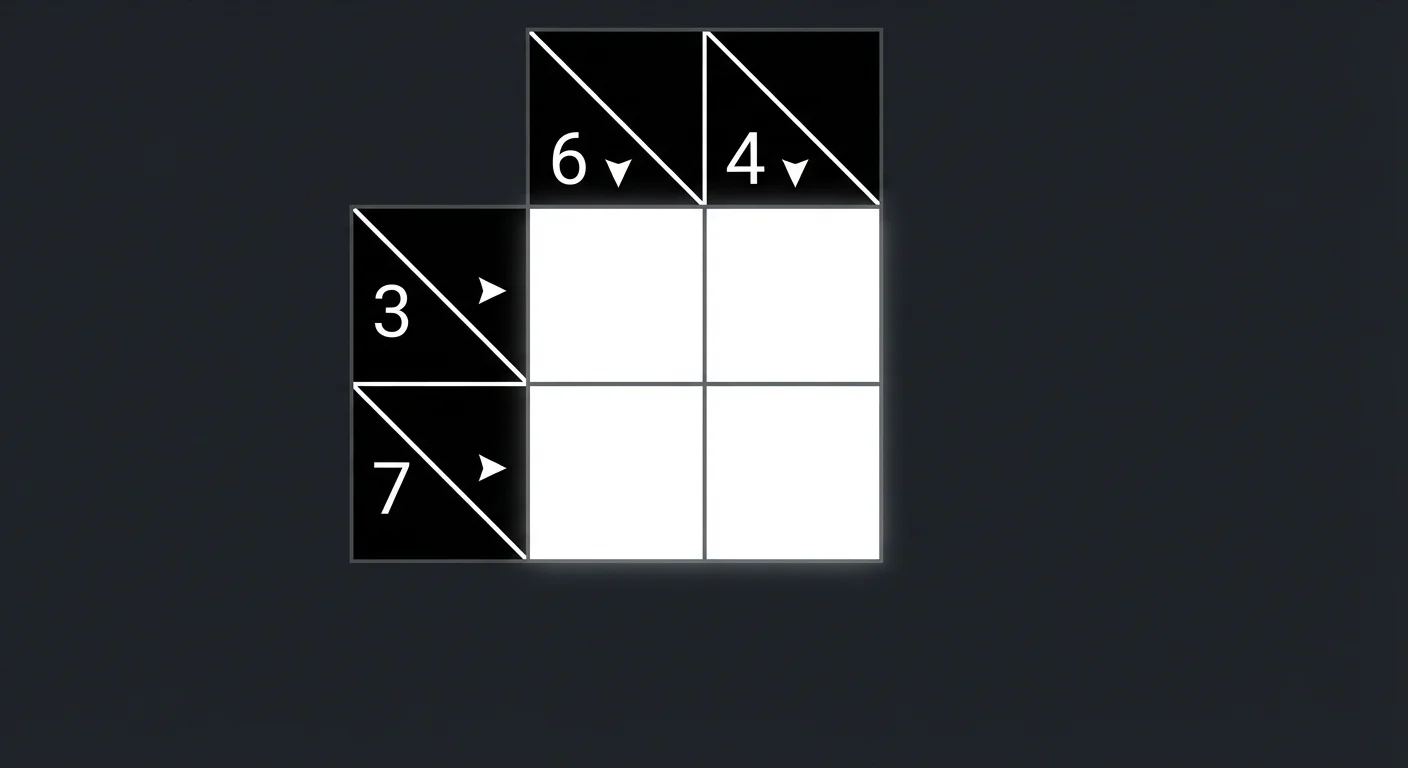
Our practice puzzle—four cells, four clues, one elegant solution.
Step 1: Identify the Magic Numbers
Start by scanning for unique combinations. "3 in 2 cells" (Row 1) must be {1, 2}—the only way to make 3 with two different digits. "4 in 2 cells" (Column 2) must be {1, 3}. These magic numbers give us our foothold.
Step 2: Use Intersection Logic
Look at the cell in Row 1, Column 2—the upper-right cell. It must satisfy both Row 1's constraint (cell is part of {1, 2}) and Column 2's constraint (cell is part of {1, 3}). Which digit appears in BOTH sets? Only 1.
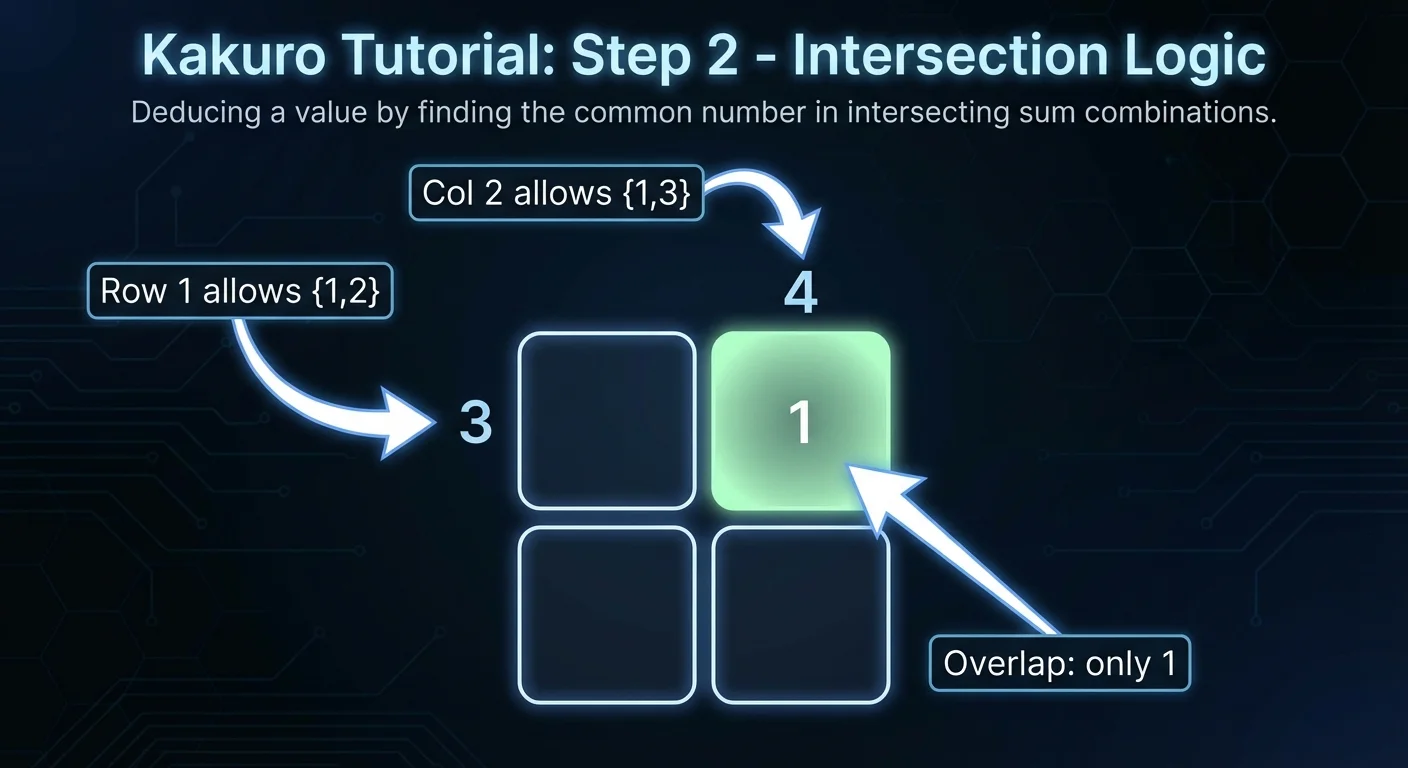
Step 2: Intersection logic reveals that only 1 satisfies both the row and column constraints.
Step 3: Chain the Deductions
With one digit placed, watch how the solution cascades. Row 1 needs digits summing to 3 and has 1, so the first cell must be 2. Column 2 needs digits summing to 4 and has 1, so the second cell must be 3. Row 2 needs digits summing to 7 and has 3, so the first cell must be 4.
Step 4: Verify Everything
Before celebrating, verify every clue: Row 1: 2 + 1 = 3 ✓, Row 2: 4 + 3 = 7 ✓, Column 1: 2 + 4 = 6 ✓, Column 2: 1 + 3 = 4 ✓. No repeated digits in any run. All sums correct. Solved!
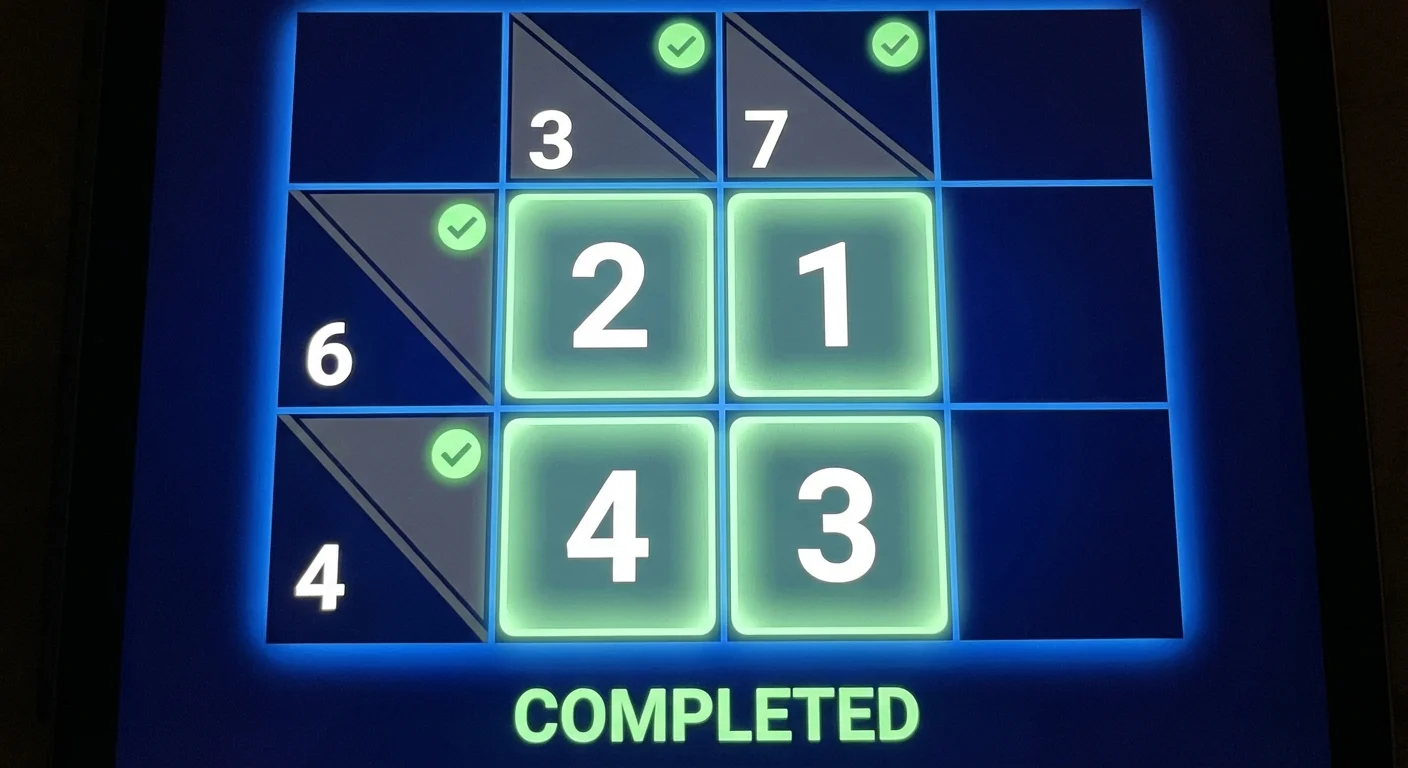
The solved puzzle—every horizontal and vertical clue is satisfied with no repeated digits.
Key Principles
- Hunt for magic numbers first—unique combinations give you certain knowledge
- Use intersection logic—find digits that satisfy both constraints
- Chain your deductions—once one cell is known, it often forces others
- Always verify—check every placement against both clues
Essential Beginner Strategies
These strategies become second nature with practice—soon you will apply them without thinking.
Strategy 1: Hunt for Magic Numbers First
This is your secret weapon. Any "3 in 2 cells" or "4 in 2 cells"? Those are {1,2} and {1,3} respectively. Any "16 in 2 cells" or "17 in 2 cells"? Those are {7,9} and {8,9}.
Strategy 2: Cross-Reference Intersections
Every white cell belongs to exactly two runs. List the possible digits for each run, then find the overlap. If a cell's horizontal clue allows {1,2,4,5} and its vertical clue allows {1,3,5,7}, the cell can only be 1 or 5.
Strategy 3: Use Elimination Within Runs
Once you place a digit in a run, eliminate it from consideration for other cells in that same run. This sounds obvious, but in the heat of solving, it is surprisingly easy to forget.
Strategy 4: Look for Forced Cells
Sometimes a digit can only go in one cell within a run. If a run must contain a 9, and only one cell could possibly be 9 based on intersecting clues, then that cell IS 9. These "aha!" moments are pure Kakuro joy.
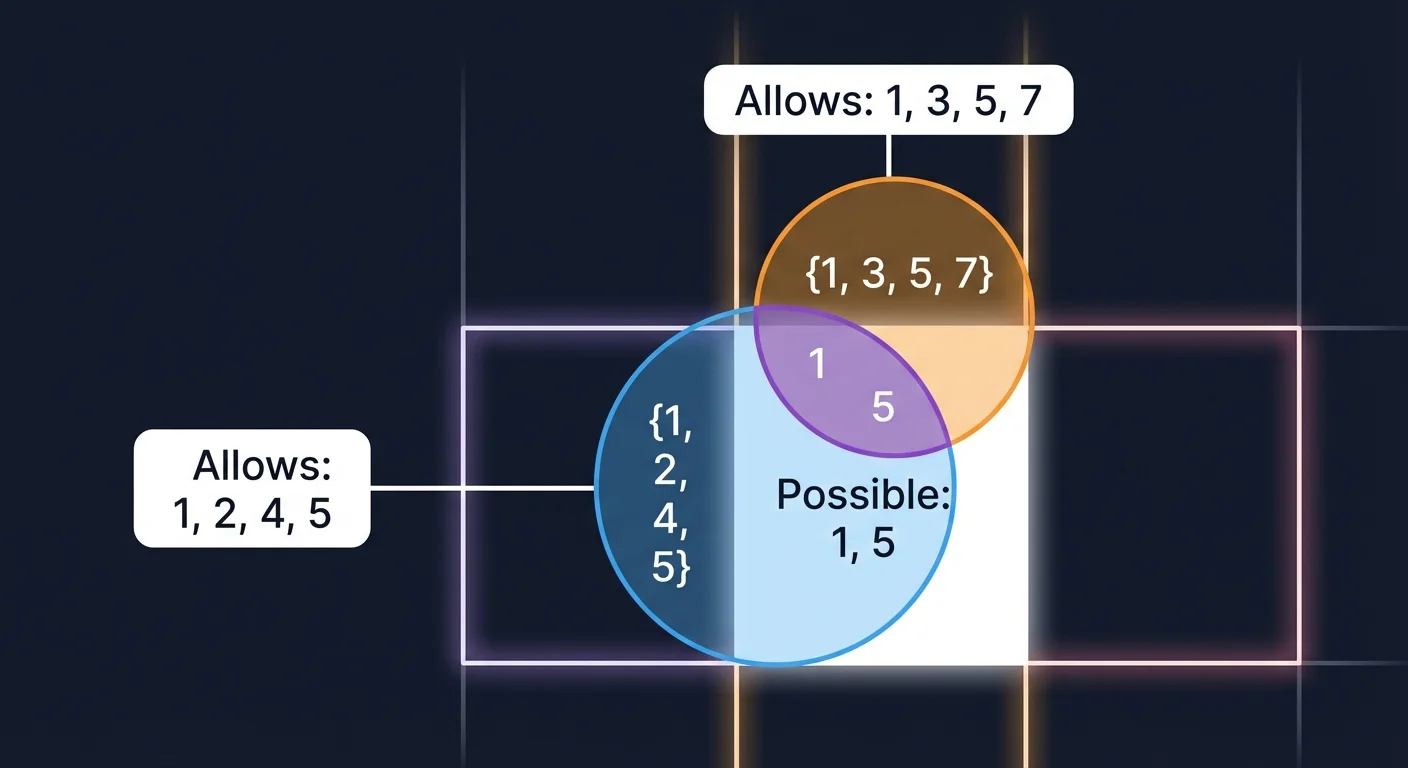
Cross-referencing narrows possibilities by finding digits that satisfy both clues.
Common Beginner Mistakes and How to Avoid Them
Mistake 1: Forgetting the No-Repeat Rule
You place a 3 in one cell and a 3 in another cell of the same run. Fix: Before placing any digit, always check: "Is this digit already in this row's run? Is it already in this column's run?"
Mistake 2: Ignoring One of the Two Clues
You satisfy the horizontal clue perfectly but forget the cell also belongs to a vertical run. Fix: For every placement, verify BOTH the horizontal sum AND the vertical sum remain achievable.
Mistake 3: Misreading Clue Direction
You sum cells below a clue when you should be summing cells to the right. Fix: Remember: lower-left triangle = clue for cells to the right. Upper-right triangle = clue for cells below.
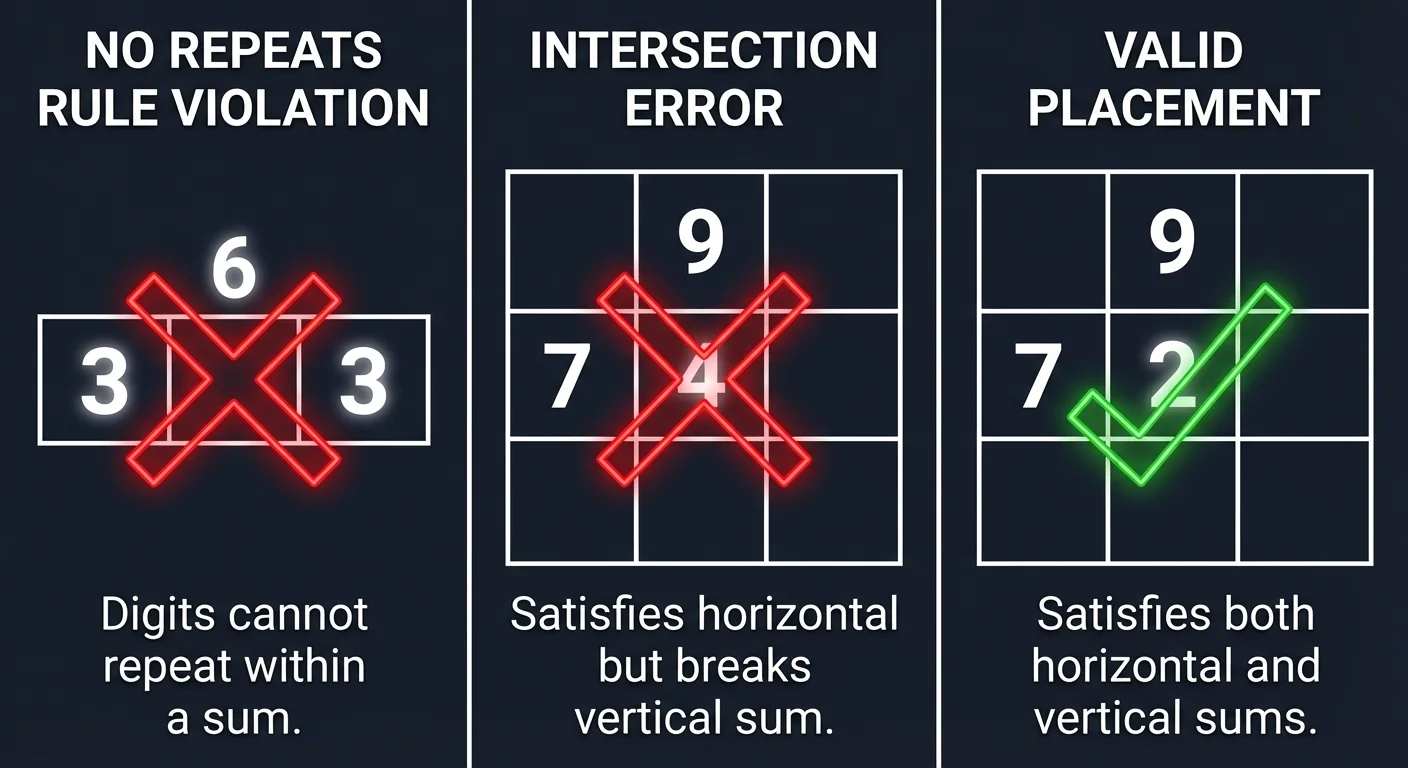
Common mistakes—always check both clues and the no-repeat rule before committing.
Tips for Faster Improvement
Memorize the Small Sums Table
Create a mental reference for all two-cell and three-cell combinations. The more of these you can recall instantly, the faster you will solve.
Start With the Edges
Cells in corners and along the edges of the puzzle often have shorter runs with fewer possibilities. Solve these first to build momentum.
Practice Daily in Short Sessions
Fifteen minutes of focused solving daily builds skill faster than occasional marathon sessions. Your brain consolidates patterns between sessions.
Graduate Difficulty Gradually
Master 6x6 puzzles before attempting 9x9. Master 9x9 before tackling 12x12 or larger. Each size teaches you to manage more complex interlocking constraints.

Pencil marking helps track possibilities—cross out candidates as you eliminate them.
Your First Real Puzzle Awaits
Start by memorizing the two-cell magic numbers (3, 4, 16, 17) -- they appear in nearly every puzzle and give you free information. On your first grid, scan for those combinations, apply intersection logic at every crossing, and let the deductions cascade from there.
Quick Reference Checklist
- Hunt for magic numbers first—unique combinations are free information
- Cross-reference every intersection—the overlap narrows possibilities
- Verify both clues for every placement—horizontal AND vertical
- Use pencil marks to track candidates—and cross out eliminated digits
- Trust the logic—every digit can be proven
Ready to Balance Your First Sums?
The magic numbers are in your head. The rules are crystal clear. All that's left is to put your logic to the test and watch the numbers add up.
Start Solving KakuroPut it into practice
Ready to solve Kakuro?
Open a free puzzle and turn the ideas from this guide into your next solve.