Connect Puzzle Strategies:
Master the Art of Flow
You've placed 23 paths perfectly. The colors are flowing, the grid is filling, and victory feels inevitable. Then you reach the 24th pair, and there's nowhere for it to go. If you've played Connect puzzles, you know this feeling intimately.
Here's the uncomfortable truth: most Connect failures aren't bad luck. They're the result of decisions made ten moves earlier that seemed perfectly reasonable at the time. The good news? Once you understand why Connect punishes certain patterns, you can spot trouble before it starts.
Watch the Tutorial
Prefer watching? This tutorial introduces Connect rules and basic techniques.
The Fundamental Shift
Think like water, not like a GPS. Water doesn't pick the shortest route—it fills available space. It finds its way around obstacles. And critically, it never leaves pockets of empty space behind.
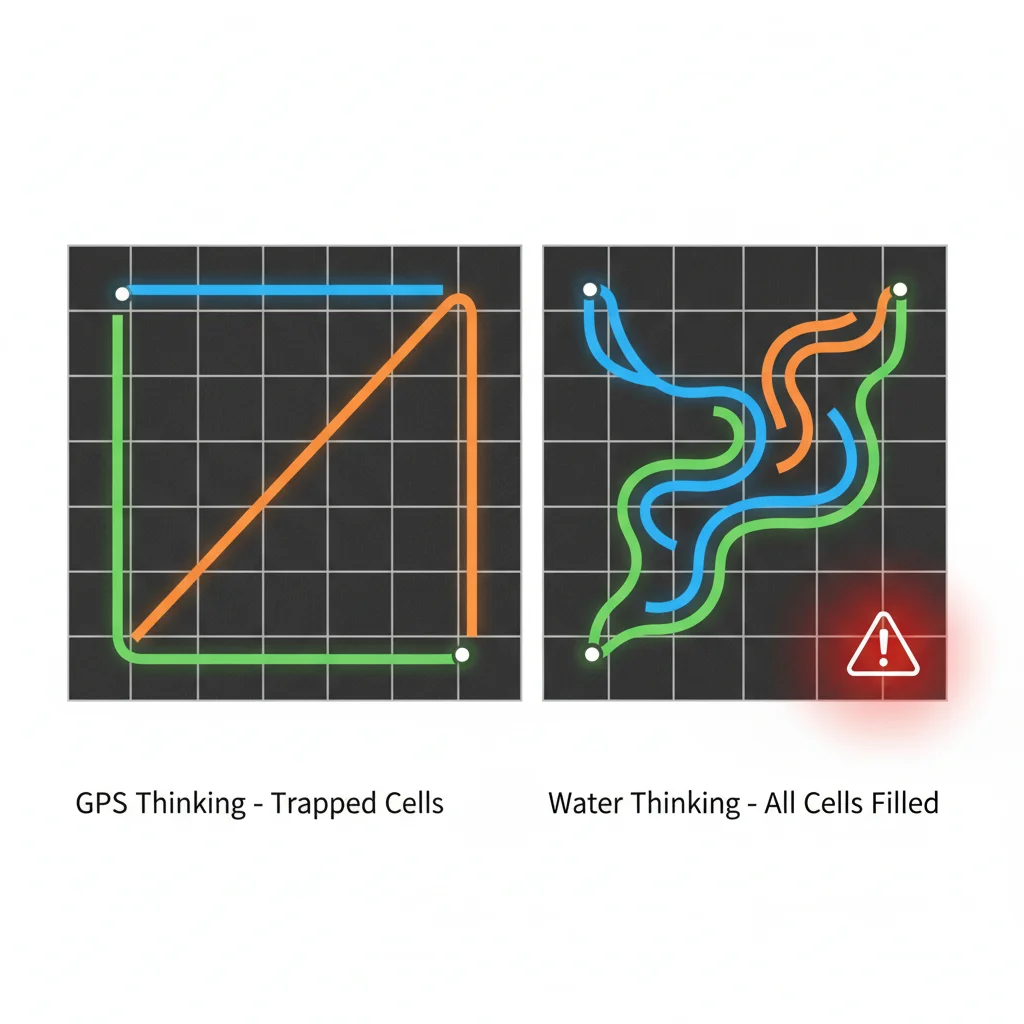
Direct routes trap cells (left) vs flowing paths fill space naturally (right)
Strategy 1: The Corner Doctrine
Corners are where Connect reveals its hand. When an endpoint sits in a corner, it has exactly two possible directions. That's not a limitation—it's a gift. Corner endpoints give you guaranteed information about where paths must go.
The Rule
Always trace corner endpoints first, even if only partially. They have the least flexibility, which means they're the most predictable.
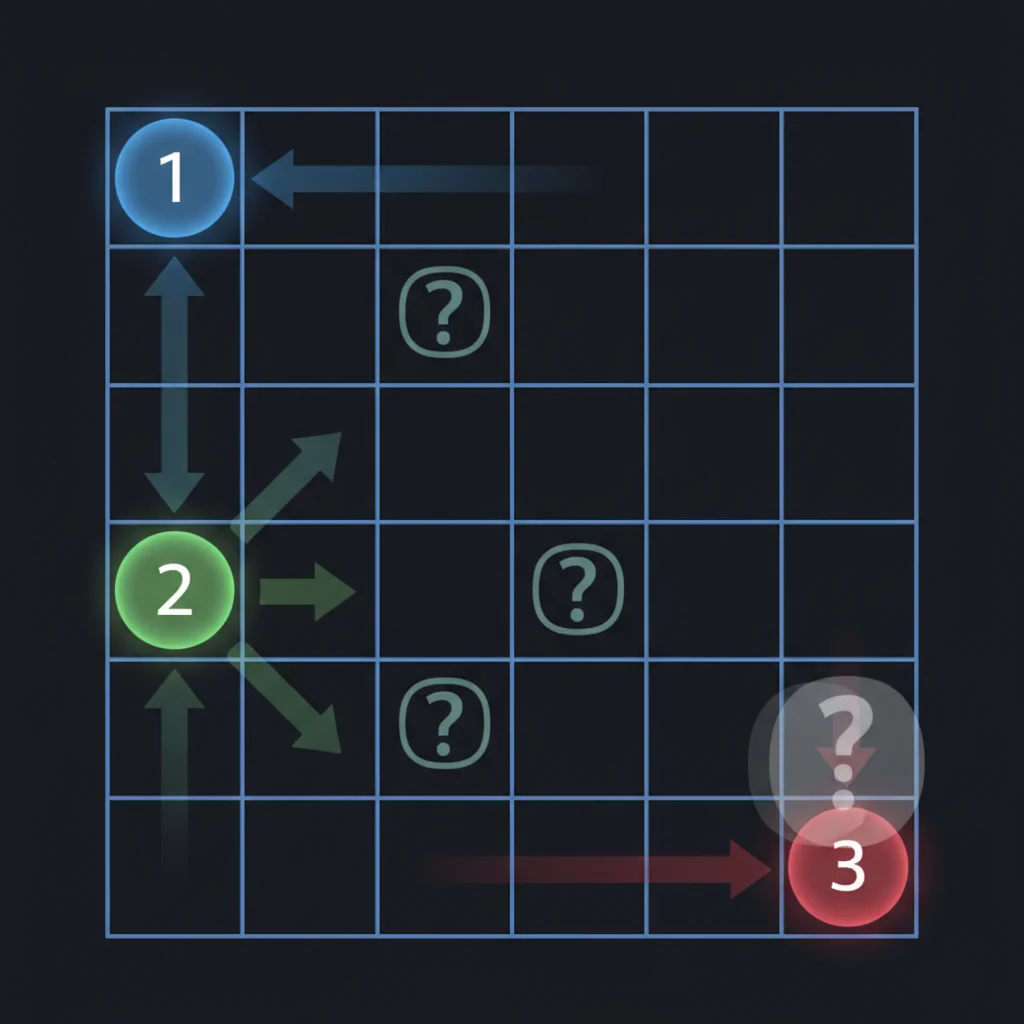
Corner and edge endpoints have limited options—trace them first
Strategy 2: The Parity Principle
This is the technique that separates frustrated beginners from confident solvers. Here's the key insight: any detour adds cells in pairs.
Picture a straight path going from A to B in exactly 6 cells. Now imagine you want to take a one-cell detour downward. You might think: "I'll go down one cell, so that's 7 cells total." But that's wrong. To rejoin your original route, you must also go back up one cell. Your "one-cell detour" actually added two cells.
Why This Matters
Sometimes you'll have two possible routes for a path. One is 8 cells long, one is 9. If your endpoints demand even parity, the 9-cell path is impossible—no matter how good it looks.
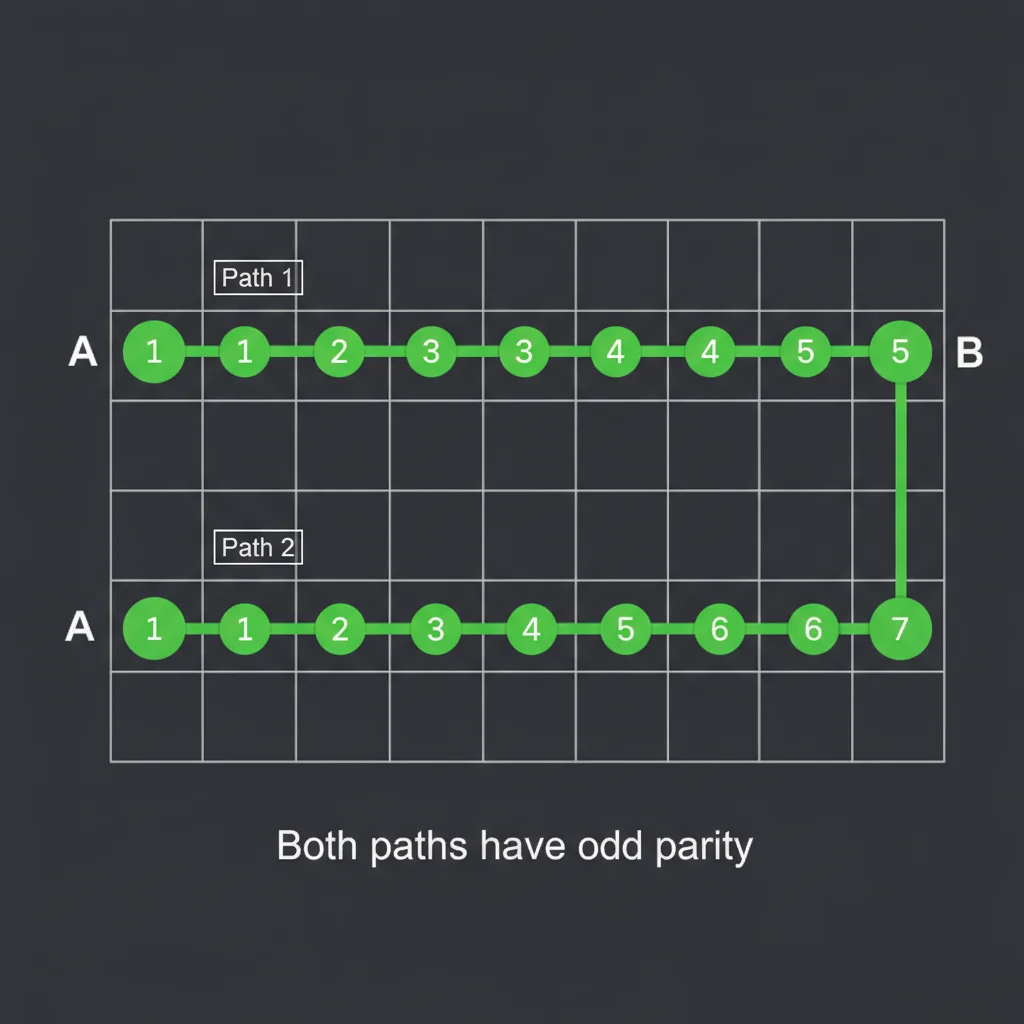
Both paths have odd parity—detours always add cells in pairs
Strategy 3: The Cell-Counting Method
If your grid has 36 cells and you have 6 pairs of endpoints, how many cells does each path need to cover on average? The answer: 36 ÷ 6 = 6 cells per path.
I call this the "real estate rule." Every path is competing for limited grid space. A path that's taking extra cells is stealing from somewhere else.
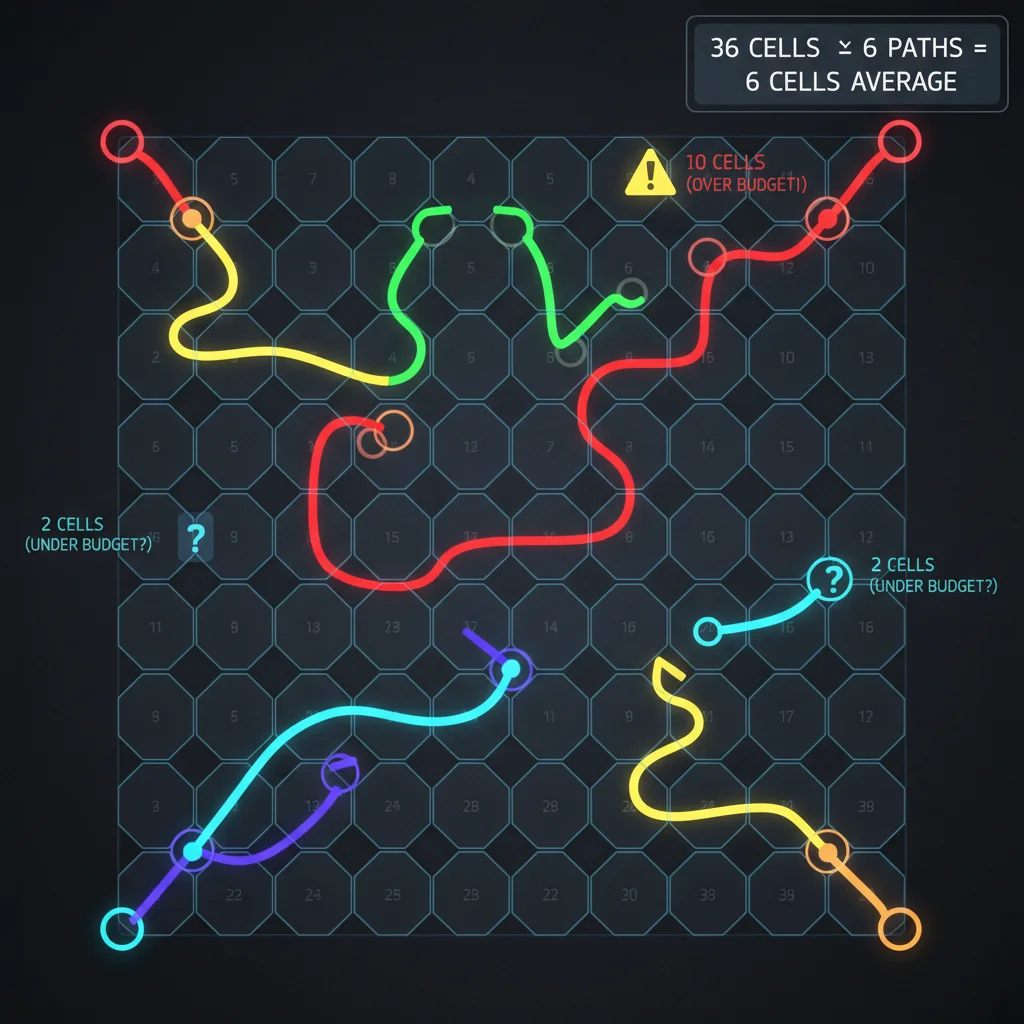
If one path takes 10 cells, another path loses 4 from its budget
Strategy 4: Recognizing Pinch Points
A pinch point is any cell where a path must pass to reach its endpoint, even though it's not obvious at first glance.
How to Spot Them
- 1. Look at where an endpoint is located
- 2. Ask: "What cells are between this endpoint and the rest of the grid?"
- 3. If there's only one route, you've found a pinch point
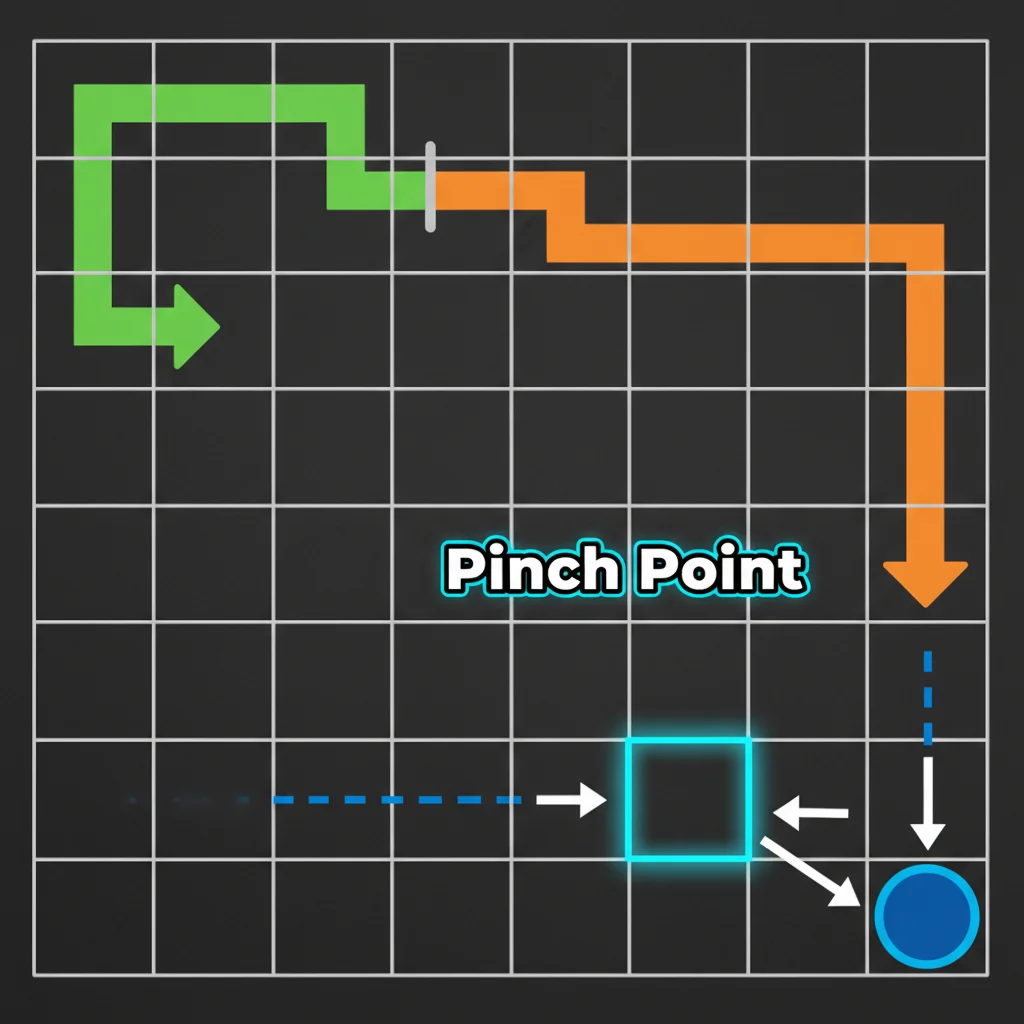
The highlighted cell is a pinch point—the blue path must pass through it
Strategy 5: The Orphan Cell Test
An orphan cell is one that would be impossible to fill if you continued with your current paths. Spotting orphans early is the difference between solving smoothly and restarting constantly.
The Test
- • Zero neighbors = orphan (game over)
- • One neighbor = will become orphan if that neighbor gets filled
Run this check constantly. It takes two seconds and saves ten minutes of frustration.
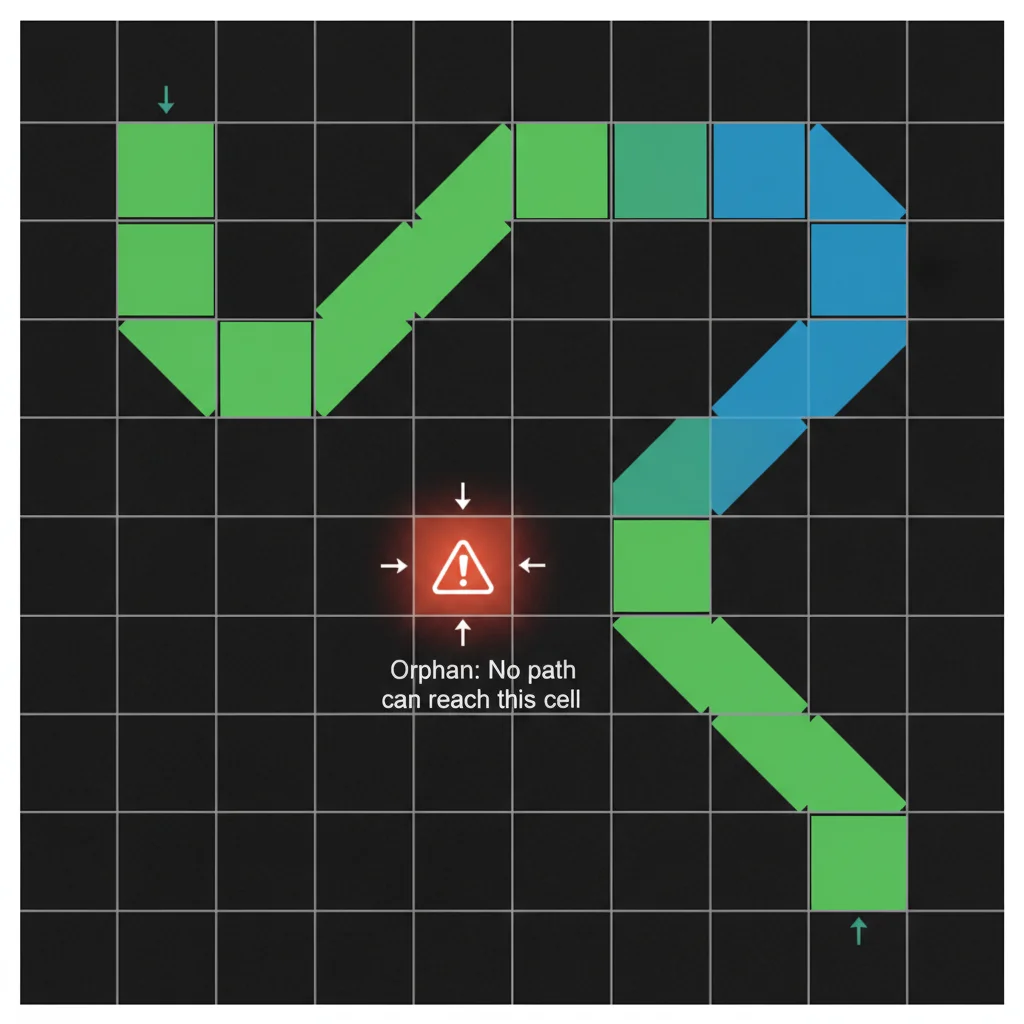
The highlighted cell is orphaned—no path can reach it
Strategy 6: The Fork in the Road
When you're stuck between two possible routes, deliberately imagine both options. For each one, trace the consequences: "If I commit to this route, what happens to the cells around it?"
The insight: You're not trying to find the "right" answer directly. You're eliminating the wrong one. In Connect, that's often faster.
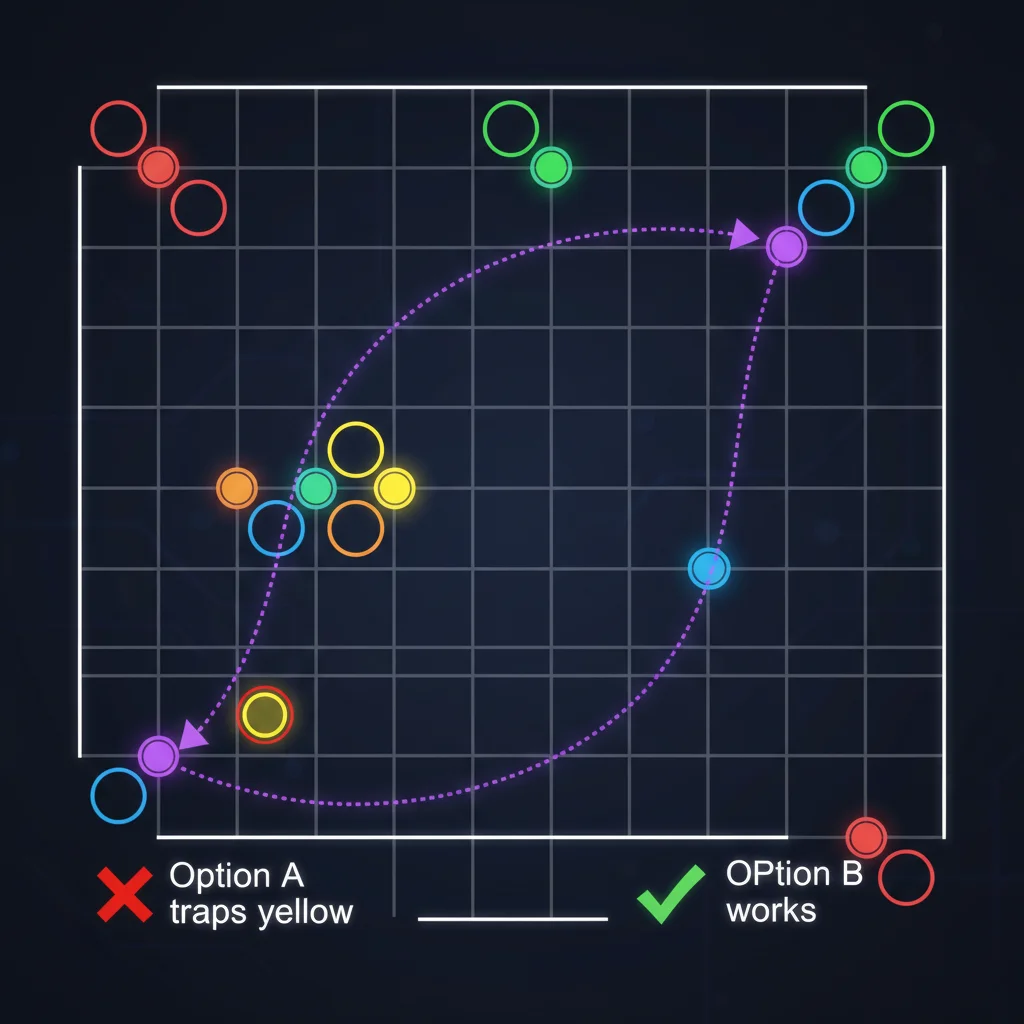
Option A traps the yellow endpoint; Option B keeps all paths viable
Strategy 7: The Corridor Clash
When two paths seem to be fighting for the same narrow passage, here's the rule: the more constrained path wins the corridor.
Constraint Priority
- • Corner endpoints = highly constrained
- • Edge endpoints = moderately constrained
- • Parity-restricted paths = constrained
- • Mid-grid endpoints with multiple routes = flexible
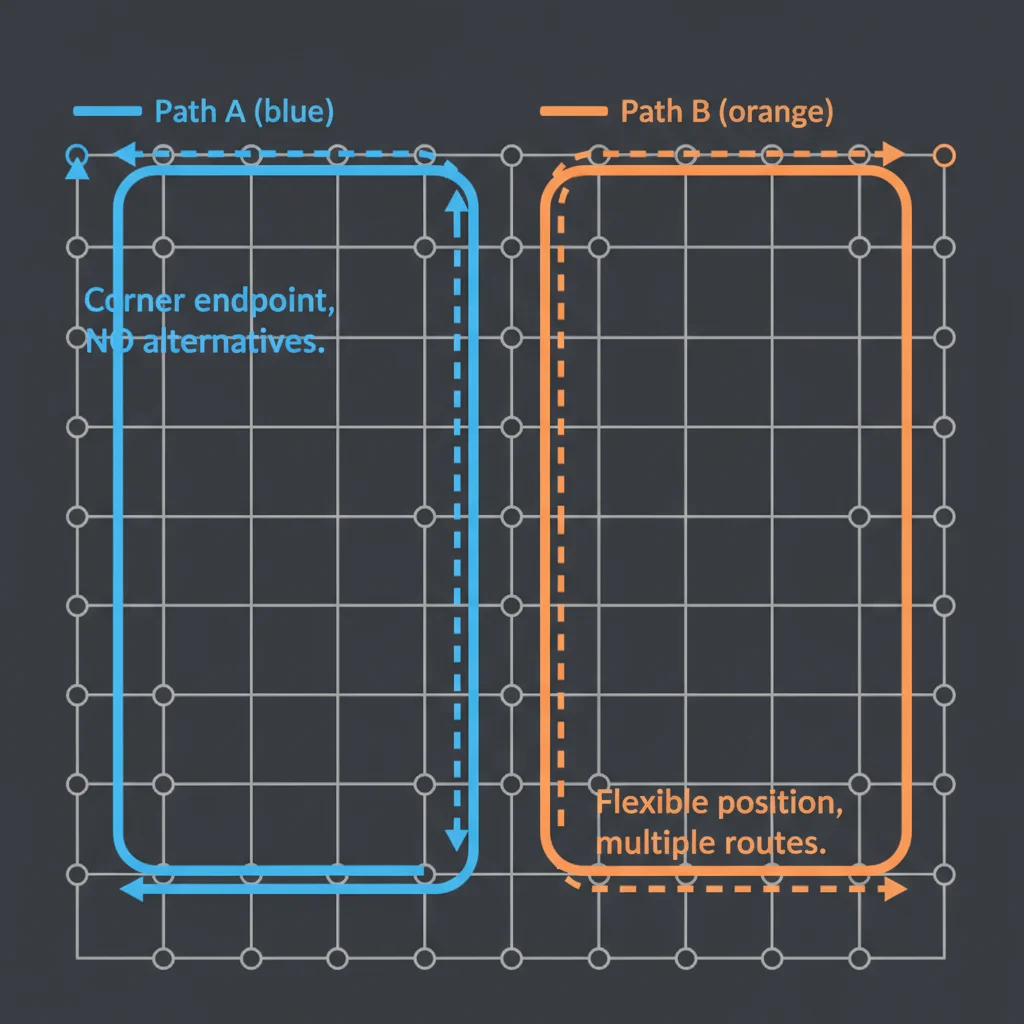
The constrained path gets priority; the flexible path finds another way
Strategy 8: The Assumption Test
Pick a cell where you're genuinely uncertain which direction a path should go. Assume one option and trace the implications until you either reach a valid solution or hit a contradiction.
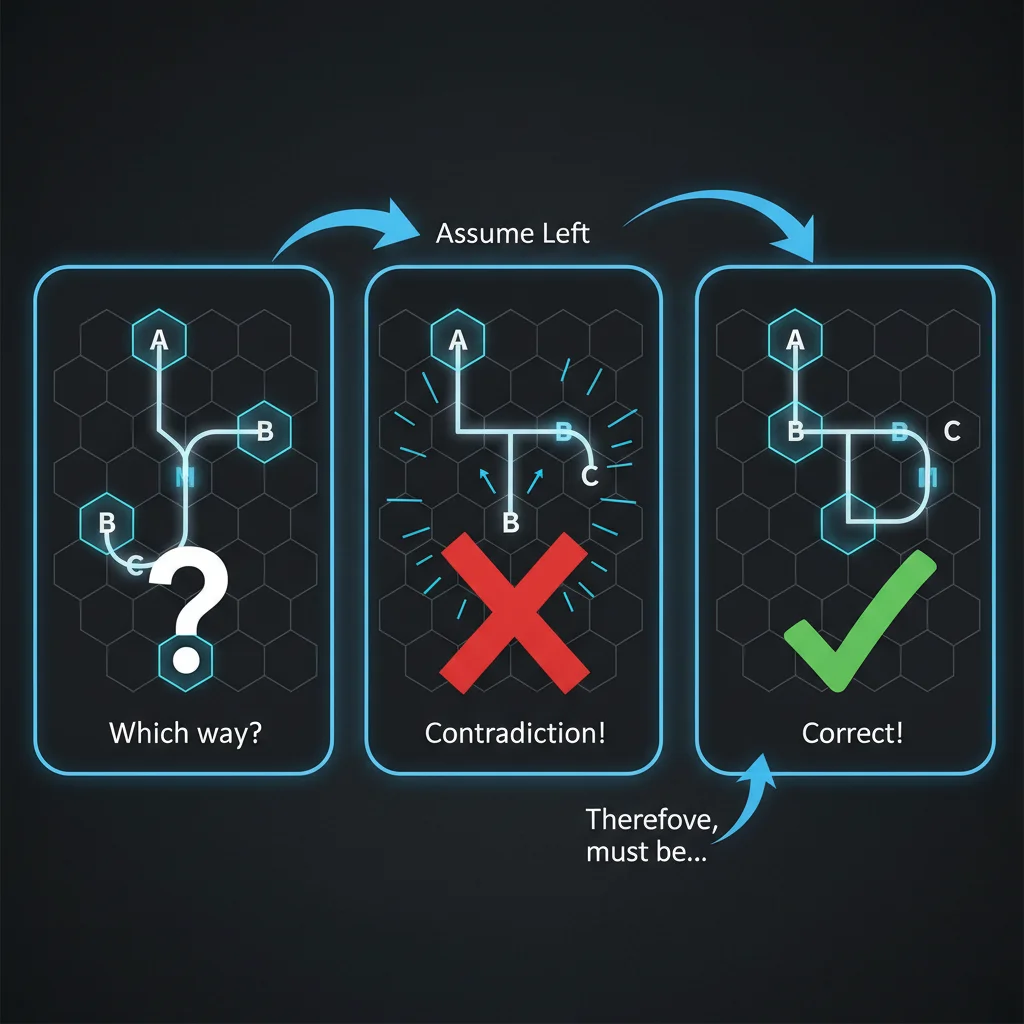
Step 1: Which way? → Step 2: Left causes contradiction → Step 3: Must go right
Putting It All Together
Phase 1: Reconnaissance
- • Count cells and endpoint pairs
- • Identify corner/edge endpoints
- • Spot obvious pinch points
Phase 2: Foundation
- • Draw all forced moves
- • Check for orphan cells
- • Let forced moves cascade
Phase 3: Strategic Solving
- • Check parity constraints first
- • Use fork-in-the-road technique
- • Watch for cut-off cells
Phase 4: Endgame
- • Remaining paths often have one option
- • Use assumption test if stuck
- • Fill in final cells
The Paradox of Connect
The more you try to plan perfect paths from the start, the more likely you are to fail. The best solvers don't draw the whole path mentally. They draw what's forced, observe what becomes forced next, and let the solution emerge.
The grid always has enough information to solve. You just have to learn to read it.
Ready to Test These Strategies?
The best way to internalize these techniques is to apply them deliberately. Start with smaller grids where you can track everything mentally.
Start PracticingPut it into practice
Ready to solve Connect?
Open a free puzzle and turn the ideas from this guide into your next solve.